NOVEMBER 2026 Vancouver Real Estate Update - Prices Hit a 5 Year Low as EVERYTHING Changes
7,951 View

- Publish Date:
- November 8, 2026
- Category:
- Real Estate Trends
- Video License
- Standard License
- Imported From:
- Youtube
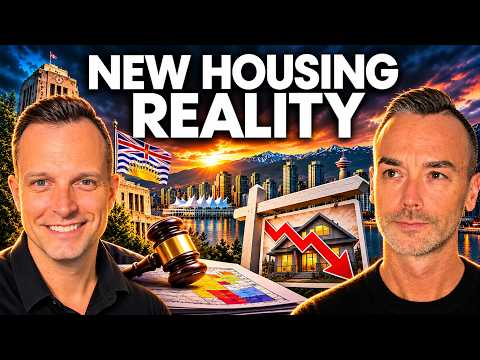
Vancouver's housing market is entering a period of extraordinary political and economic change. With a new BC Premier, a new Mayor and a dramatically reshaped Vancouver City Council, and Democrats taking control of both chambers of the US Congress, the policies governing housing development, affordability, and investment could be heading for a major reset. Meanwhile, October's real estate statistics reveal a market under mounting pressure, with home prices falling to levels not seen in more than five years.
Vancouver's newly elected council brings 121 housing policy proposals into focus. The Green Party, holding five seats, is prioritizing affordable housing, co-operatives, tenant protections, and greater public involvement in development. COPE, with four seats, is proposing more than 20,000 affordable homes, expanded rent controls, additional property taxes, and an increase in the Empty Homes Tax to 9%.
OneCity is advocating sweeping zoning reforms, including four-storey buildings throughout Vancouver, six-storey developments near urban centres, and subdivisions on lots as narrow as 25 feet. These proposals could substantially reshape redevelopment opportunities for homeowners and builders. The central question is whether these competing approaches will accelerate housing construction or introduce additional financial and regulatory challenges for an already struggling development industry.
Political developments south of the border add another layer of uncertainty. Democratic control of Congress could influence American trade policy, tariffs, economic confidence, and bond markets. For Canadian homeowners, these developments matter because changes in government bond yields can affect fixed mortgage rates, borrowing costs, and ultimately housing demand.
The financial pressures facing homeowners are also intensifying. Canada's mortgage arrears rate has climbed to 0.30%, its highest level in approximately 12 years. British Columbia has reached 0.27%, while Ontario stands at 0.35%. Although Canadian arrears remain considerably below the 2.06% reported in the United States, the upward trend raises concerns as mortgage renewals and elevated living costs continue squeezing household finances.
Perhaps the most alarming development is occurring in Metro Vancouver's presale market. Across Greater Vancouver and the Fraser Valley, just two projects launched in October, representing a combined 32 homes. Not a single unit sold. The collapse in new project activity raises serious questions about future housing supply, developer confidence, and the long-term consequences of today's construction slowdown.
October's resale statistics reinforce the challenges. Greater Vancouver recorded 2,024 sales, approximately 23% below the 10-year average and the sixth-slowest October in 26 years. Active inventory remained elevated at 15,682 properties, while foreclosure-related listings climbed to 667, up dramatically from 230 in October 2024.
Prices continue moving lower. The benchmark home price fell another 0.7% to $1,075,900, marking five consecutive monthly declines and a 5.2% annual decrease. Vancouver home values have now retreated to April 2021 levels, effectively erasing more than five years of appreciation.
With political leadership changing, construction activity collapsing, mortgage stress rising, and property values declining, Vancouver real estate faces a pivotal question: can new housing policies restore confidence and affordability, or will the market face further turbulence before a meaningful recovery begins?
_________________________________
Connect With Us:
📆 https://calendly.com/thevancouverlife
📧 [email protected]
Dan’s Channel: www.youtube.com/@VancouversTopRealtor
Ryan’s Channel: www.youtube.com/@ryan_thevancouverlife
⬇️ FREE RESOURCE FOR SELLERS
Wondering if now’s the right time to list your home?
Grab this free resource and find out how we help Sellers sell for More Money 👉 https://thevancouverlife.com/topdollar
⬇️ FREE RESOURCE FOR BUYERS
Thinking about buying a home?
Grab this free resource and find out how we help Buyers navigate this market 👉 https://thevancouverlife.com/buyersguide
The Vancouver Life Real Estate Group are licensed Real Estate Agents at eXp Realty Vancouver
🏆 Top 1% Presidents Club 2024 / 2025
🏆 Top 10% Medallion Club Members 2019 to 2025
🏆 Over $600,000,000 in sales
www.thevancouverlife.com
_________________________________